


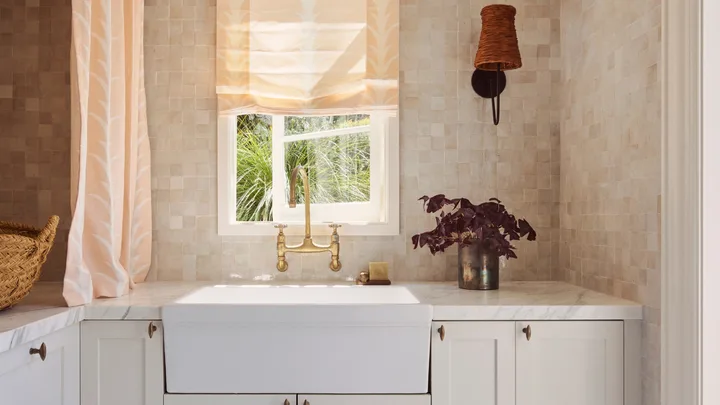
If the kitchen is the heart of the home, then the laundry is the engine room. Do we particularly enjoy hanging out in the engine room? No, not really (unless you’re trying to get a minute away from your little ones). But does that mean the laundry should be an afterthought? We think not. And in fact, when laundry design ideas are given the same amount of attention as our kitchens and bathrooms, there’s no reason why they can’t be equally as impactful.
Although the laundry is often the space we try to keep hidden from guests, a laundry room that has been designed with functionality and style in mind doesn’t need a closed door. A well-designed laundry can be chic and calming, but most importantly, it can keep all your dirty clothing artfully hidden, no matter how big or small your space is.
Whether you’re looking to make a minor upgrade or a total overhaul, we’ve answered all your questions on laundry design ideas, renovation, current trends and organisation tips, so you can proudly keep your laundry door open.
-
-
-
Native ad body. Sponsored by %%sponsor_name%% -
-
-
Native ad body. Sponsored by %%sponsor_name%%
What is the best way to design a laundry?
Gone are the days when laundries were relegated to a hidden corner of the home or forgotten in the looks department. These hard-working spaces are now recognised as design-worthy rooms deserving attention and clever planning. Industry experts Melinda Norton, senior trade account executive at Winnings, Pia Watson, interior designer and director of Studio Soleil, and Amanda Watt, Laminex Head of Marketing and Digital, share their knowledge on where to spend, the colours to choose and how to maximise the space at hand.
“As the Australian home evolves, the laundry is increasingly being approached with the same design intention as the kitchen,” Amanda tells us. “No longer viewed purely as a utility zone, it’s now considered an important space where cohesive joinery, thoughtful material selections, and refined detailing matter just as much.”
So, what to choose first: the design or appliance? If you’re creating your laundry design from scratch, Daniela Santilli, Bathroom & Kitchen Merchandising Leader at Reece Bathrooms, recommends considering your laundry layout before falling in love with any fixtures or fittings. Designs can then usually be tweaked to accommodate choices, she says.
“If you’re only looking to complete a minor renovation, you’ll need to work with similar product types, such as upgrading an inset trough and washing machine,” she says. It’s also worthwhile thinking about ergonomics – for instance, whether your washing machine and dryer will sit side by side or on top of one another.
Similarly, don’t forget to consider your everyday routines before the planning process begins. “I can’t stress it enough – the most important part of planning a laundry renovation is functionality,” says Pia. “Every decision should be made through the lens of ease, efficiency and flow.” Melinda agrees: “The smartest approach is to step back from the features list and think about how you actually live,” she advises. “The best machines aren’t the most advanced – they’re the ones that fit seamlessly into your routine and your space.”
Top loader vs front loader
When it comes to choosing the best washing machine – and deciding between a top or front-loading one – there are a few things to consider. Top loaders have faster cycle times than front loaders and often have larger capacities. Also, you can easily add garments to a top loader mid-cycle.
Front loaders are gentler on clothes, have higher spin speeds for more efficient drying and are quieter than top loaders. They can cost more initially, but they’re built to be more energy- and water-efficient, saving you in the long run.
To check the water and energy ratings of your machine or one you’re thinking of buying, go to waterrating.gov.au and Energyrating.gov.au.
Do I need to waterproof my laundry?
“Washing machines leak, moisture builds up and floors can be completely ruined without correct waterproofing,” Daniela says. So, in short, yes, it pays to waterproof your laundry. Costs vary depending on the size of the space, but you can expect to pay from $300 to $400 for a standard-size room, she adds.
How can I make my laundry more functional?
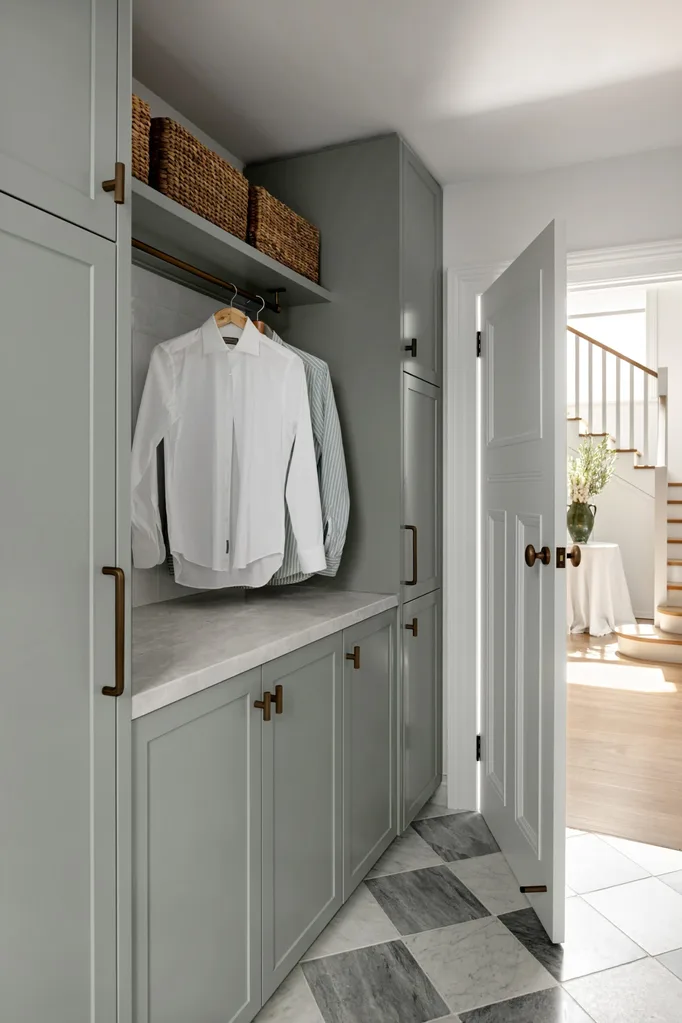
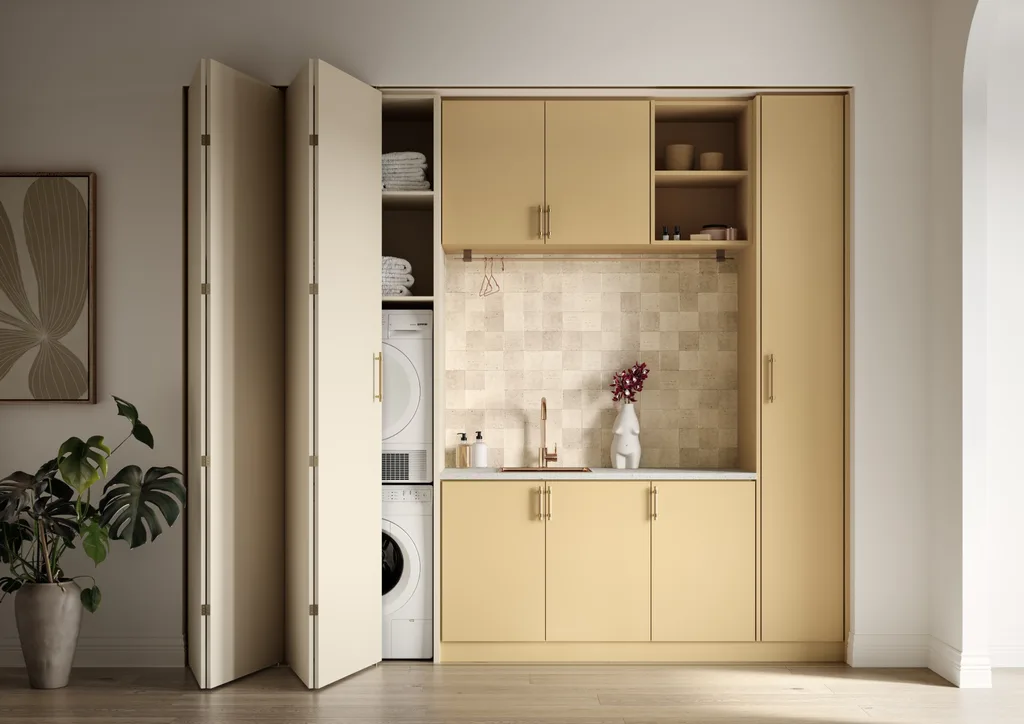
You can never have enough storage, and the laundry is no exception. When it comes to laundry organisation and storage solutions, Daniela says vertical options such as tallboy cupboards, either hung or free-standing, mean items like irons, ironing boards, vacuum cleaners, hampers and baskets can be easily kept out of sight.
She also advises utilising all areas, especially if you’re redesigning an existing room. “Every awkward space can have its purpose; think about incorporating items such as towel rails, robe hooks, portable storage and unique shelving into those tricky gaps,” she says.
What is a European-style laundry?
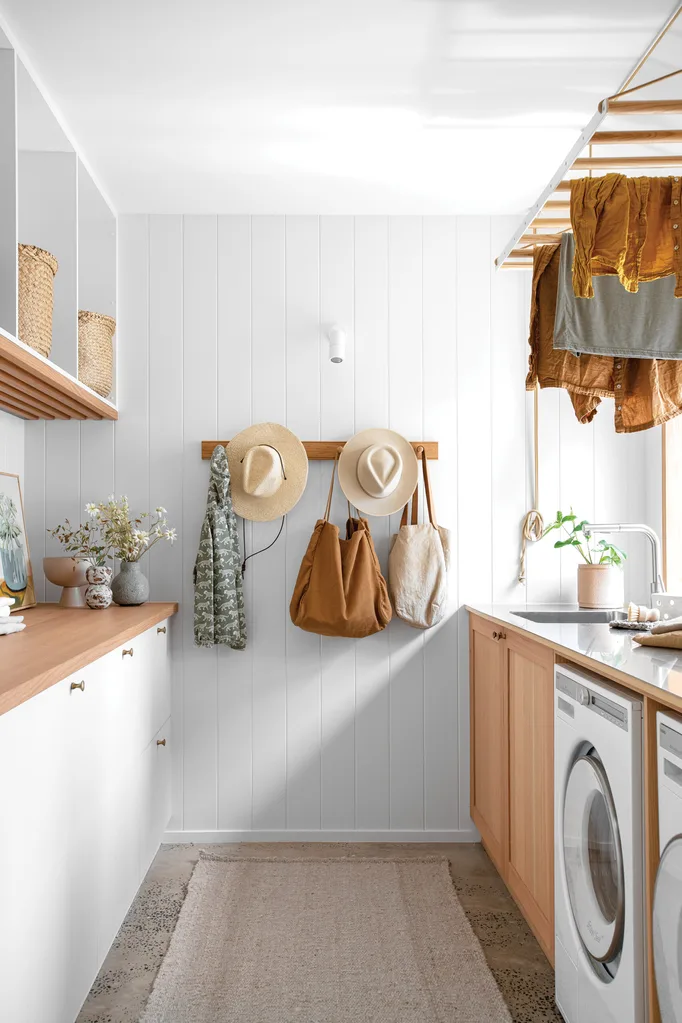
Combining your laundry and bathroom or kitchen is a great space-saver and it also means “wet rooms” can be built together, saving space and money. This concept is what’s referred to as a European-style laundry.
“If you create a hybrid laundry and bathroom space, you’ll still have a great range of options both stylistically and functionally, while saving on the footprint of two separate rooms,” Daniela says. “Keeping things compact is key, so choose tapware that takes up the least amount of space.”
As a European-style laundry is integrated into key areas of the home, you’ll need to consider ventilation, noise, installation and product selection carefully.
“You’ll need to look at the depth and width of troughs, ensuring you have enough space to fit certain styles and brands within the smaller space,” Daniela says. “You’ll often find these laundry types will include a combined dryer and washer.”
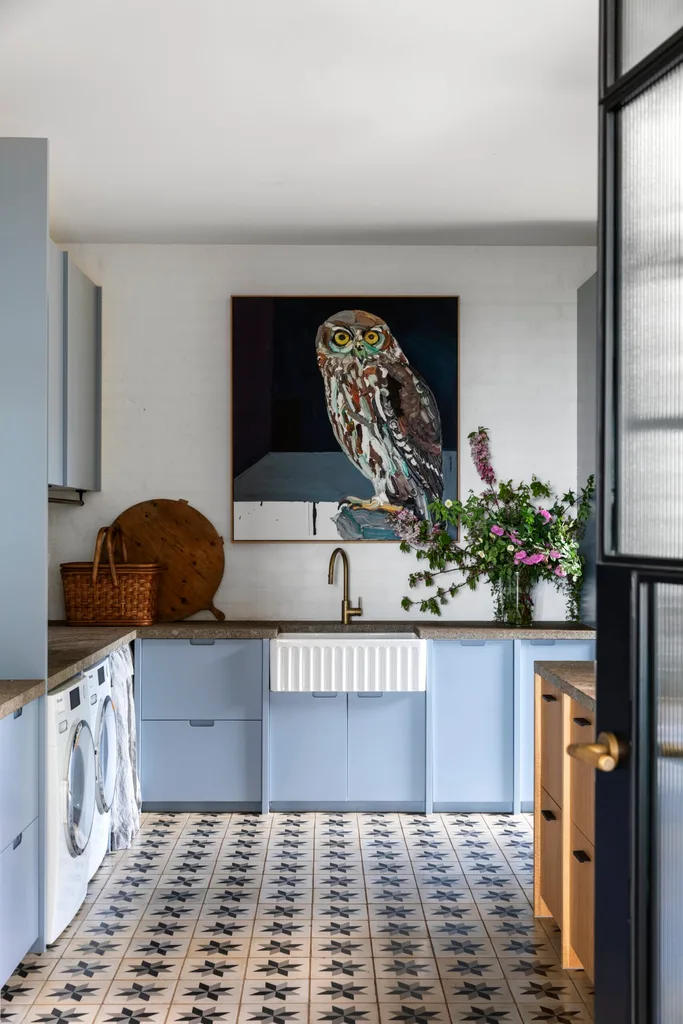
Laundry design ideas
There’s no denying the laundry can be a place of chaos, but interior designer Nina Maya Skrzynski says there is a fail-safe tip to combat the perils of dirty clothes. “Invest in a set of pocket doors,” she says. “These allow you to close off the whole space when you want the laundry out of sight.”
Nina says custom joinery is a great way to create a highly functional space that flows with the rest of your home. Her advice is to design your laundry and kitchen at the same time.
“By using the same company to create both areas, you’ll get complementing joinery as well as saving time and money,” she says. A custom design, according to Nina, starts at roughly $17,000 and covers fixtures, appliances, trades, joinery and tiling, but this can vary depending on your finishes.
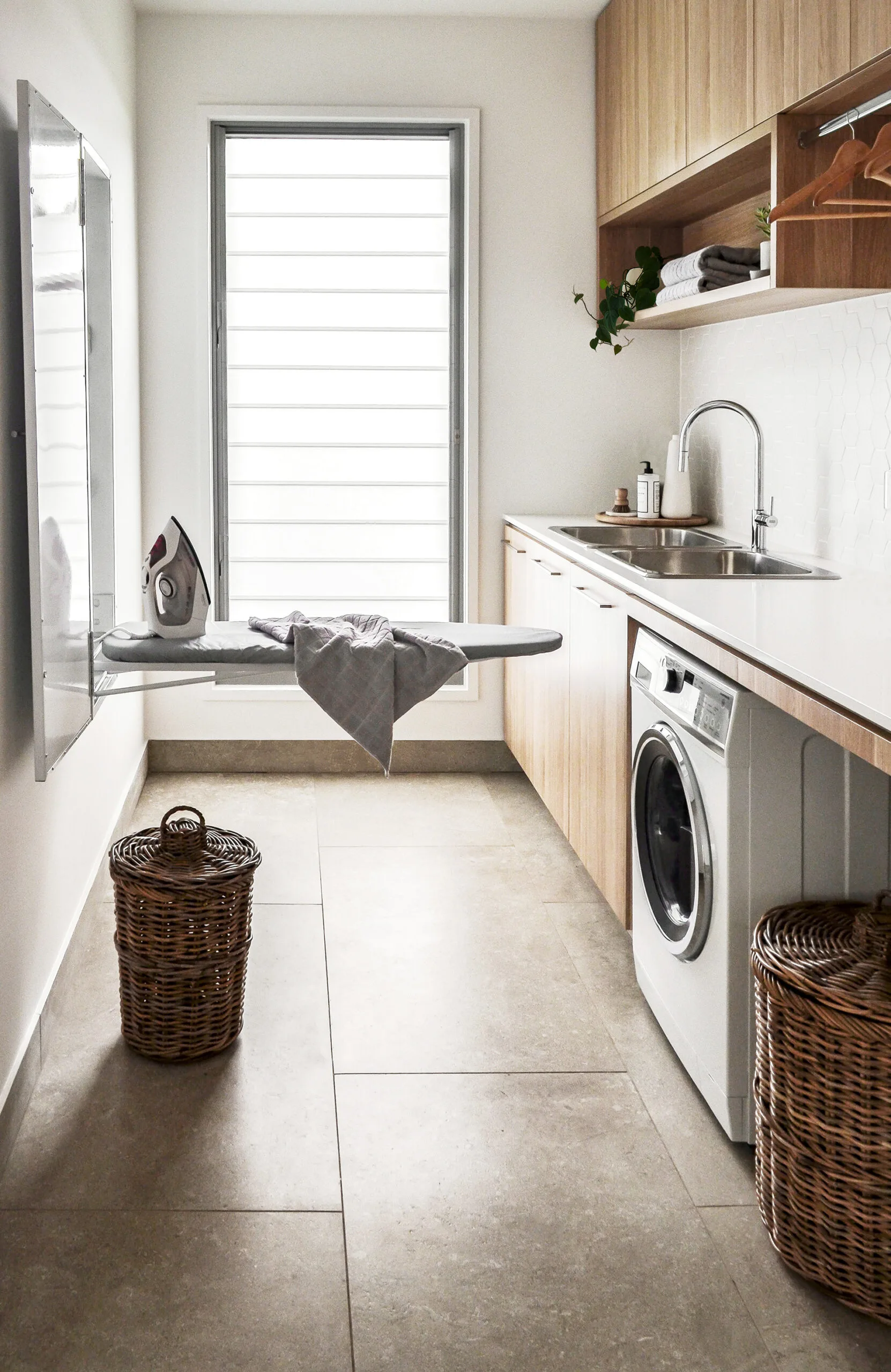
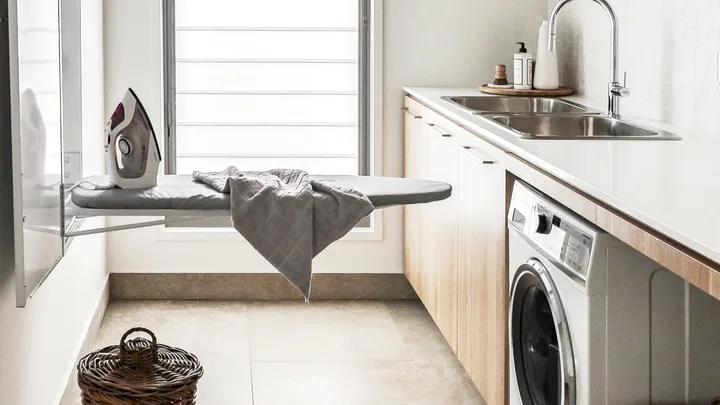
This clever laundry design features a wall-mounted ironing board cupboard to maximise space. (Photography: Kasia Clarke | Design: Zephyr and Stone)
DIY laundry storage ideas
If joinery isn’t an option, there’s still plenty of ready-made cabinetry including tallboys and wall cabinets that will keep your laundry organised. Bunnings and IKEA are great places to start.
“If you’re looking for a set-up that’s ready to go, quicker to install and involves a lot less planning, a flat pack option is ideal,” says Daniela. However, keep in mind that this may not be the best option if you’re picky about design or have an awkward-shaped room.
Another DIY storage option is to add a floating rail on which to dry clothes; all you need are existing overheads cabinets to anchor some hooks into, a sturdy piece of dowel or a metal rod, and away you go!
What are the laundry room trends for 2026?
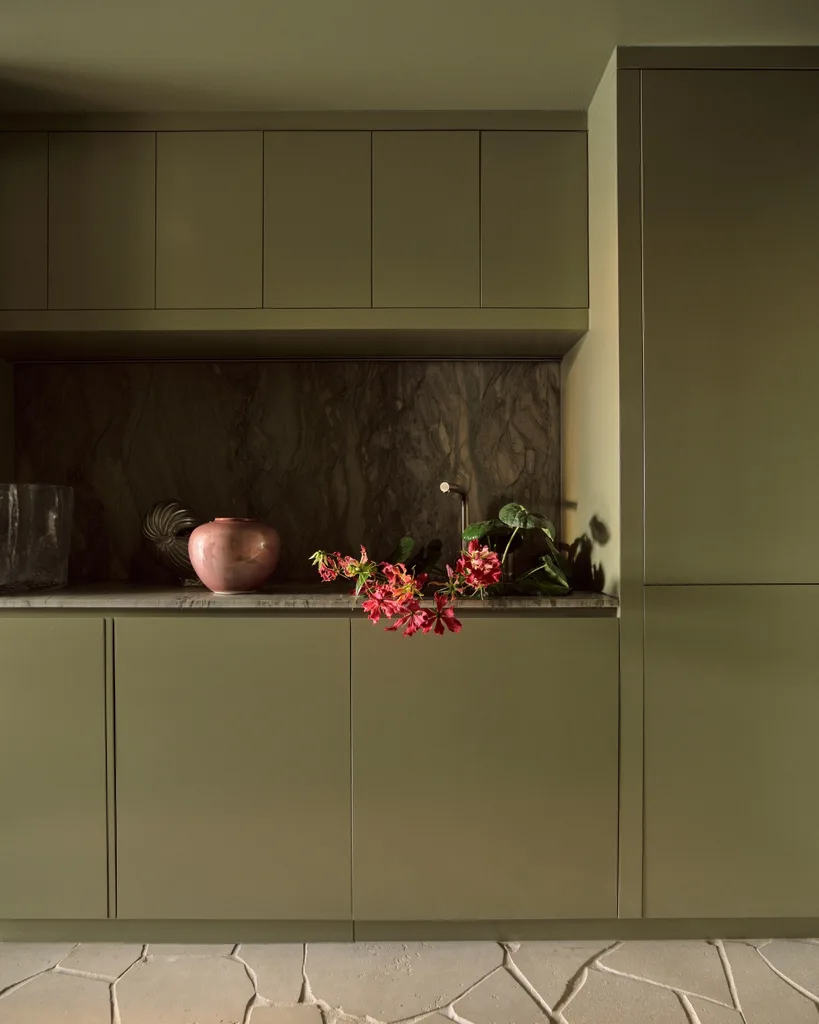
Laundries are now an extension of kitchens and bathrooms, so fixtures and fittings need to look the part. “The modern Australian home is increasingly defined by a strong connection to the landscape, expressed through materials and palettes that reflect its warmth, texture, and natural variation. This design approach extends to utility zones, where thoughtful joinery and durable, design‑led surfaces play an essential role,” says Amanda. “Whether through authentic woodgrains or contemporary matte finishes, the aim is to create a consistent material thread that elevates the laundry and mudroom from purely functional spaces into seamlessly integrated parts of the home’s overall aesthetic.”
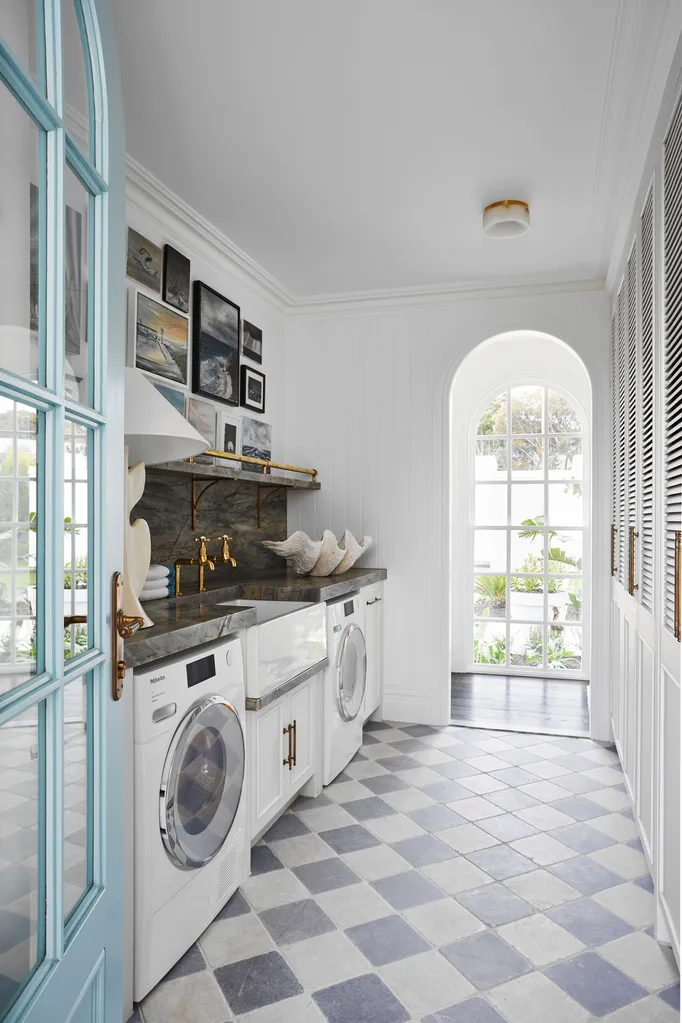
“We’re seeing tapware become a key feature piece, with the same range of colour options and styles available in the laundry space,” Daniela adds, mentioning that traditional-style tapware is seeing a return in popularity alongside slim profile designs.
When it comes to tiling, large format styles are contemporary and economical, says Nina. “They give a designer finish, are cheaper than marble, and work well for countertops and splashbacks,” she says. If space isn’t an issue, a built-in ironing board is a handy addition. Also, “in larger homes, I’m a big fan of laundry chutes from upper levels,” Nina adds.
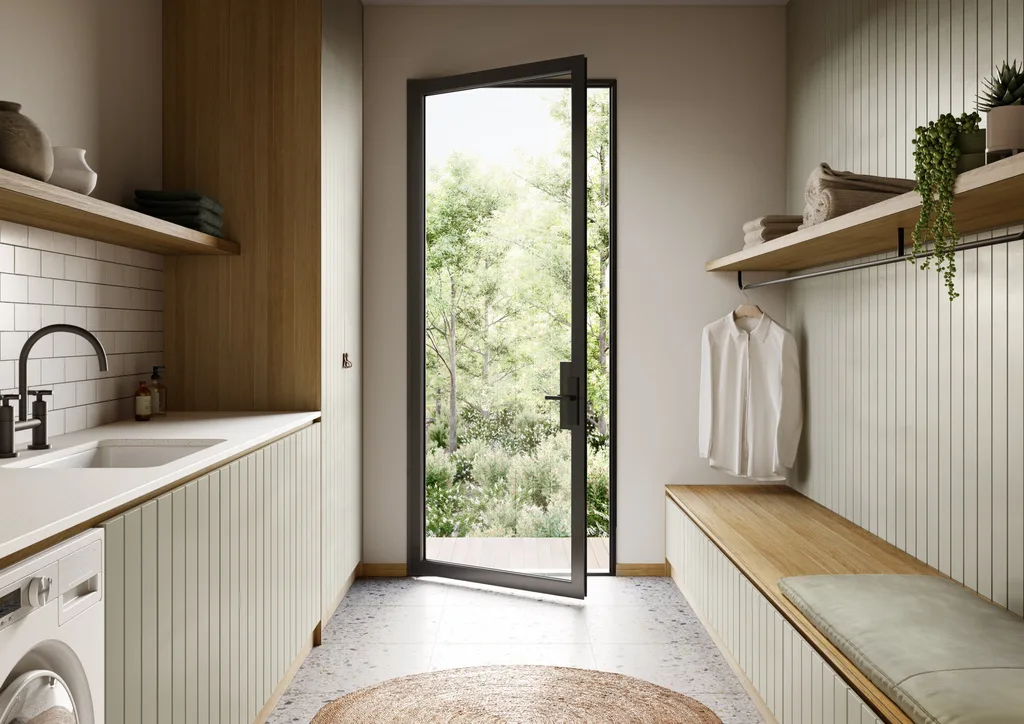
Should laundries be colourful or neutral?
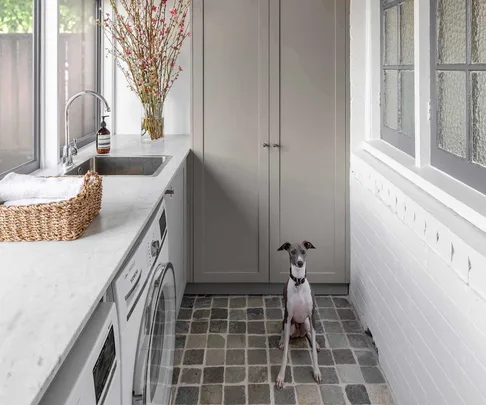
While white is no longer the default colour for laundries – or even white goods – a light-coloured space is still elegant and practical. Add texture with natural stone flooring, a feature tile or interesting hardware and, whatever your colour scheme of choice, Pia says integration is key. “If your laundry is on the lighter side, go with white appliances,” she recommends. “For a darker, moodier space, I would opt for a graphite.
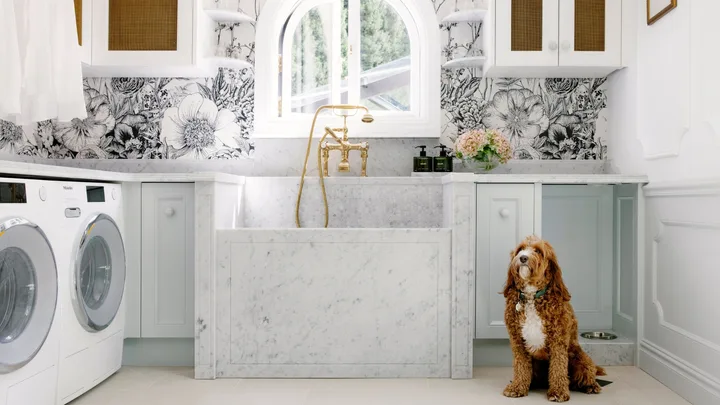
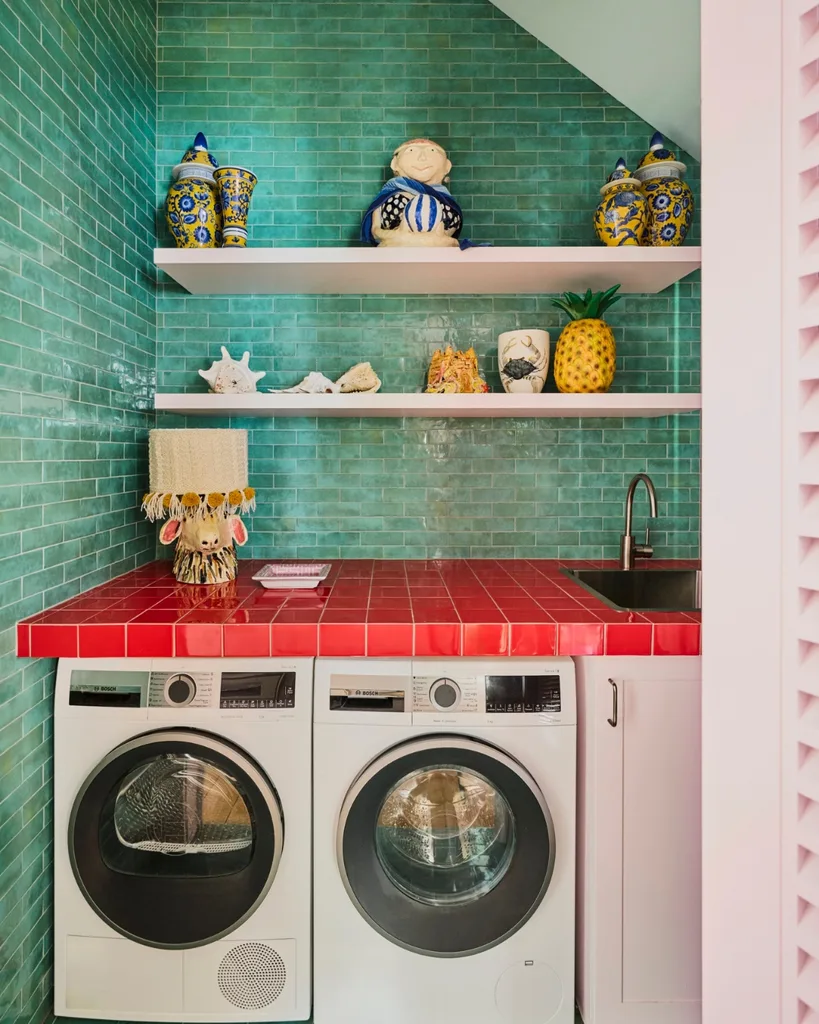
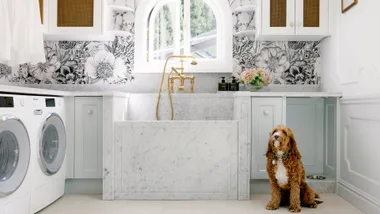
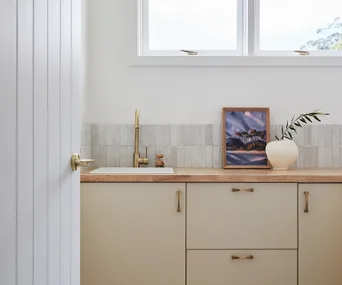
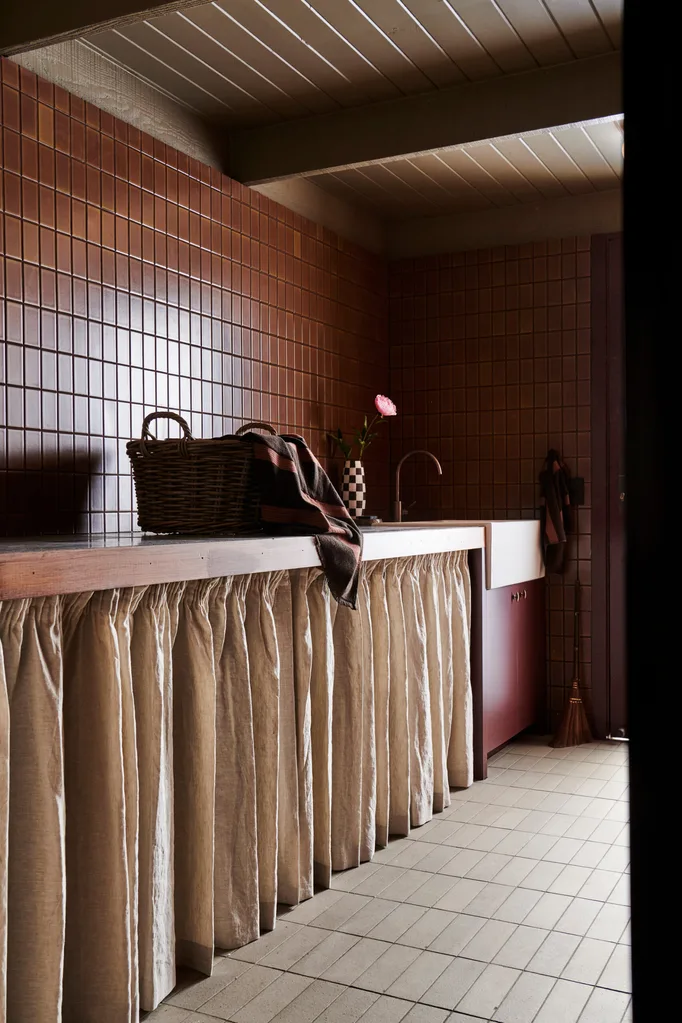
We’re also seeing laundries that make a statement, such as this colour-drenched space, as well as laundries that add a pop of colour through coloured cabinetry and a playful tiled splashback. Farmhouse sinks, a staple in country homes, are also an enduring laundry room design trend that find their way into inner-city homes. In more contemporary spaces, we’re seeing the large proportions of a farmhouse sink replicated in more modern finishes such as brushed brass.
Laundry dos and don’ts
In summary, here’s what you want to consider before designing or renovating your laundry:
DO
- Opt for ample storage for items such as ironing board, vacuum cleaner, cleaning products and accessories
- Include bench space for folding
- Incorporate a drying area (if space permits)
- Use vertical shelving, rails and hooks
- Get plenty of quotes
- Choose similar fixtures to your kitchen and bathroom for seamless style
DON’T
- Buy appliances without doing your research into their functionality
- Just go for what looks good; laundries are hard-working and need to be practical above anything else
- Choose appliances before you’re happy with your design
- Forget about the importance of proper waterproofing

