 Photography: Brigid Arnott
As the empty-nester owners of this home on Sydney’s Lower North Shore entered a new phase in their lives, so, too, did their house, which they had bought in 1996 to raise a family. Five years ago, they asked architect Jorge Hrdina and director Julia Levitt of Nelson Thomas, along with senior landscape designer Sarah Marcellino, to refresh their harbourside property. The garden was previously designed by the late Peter Fudge, and, true to his signature style, celebrated the rocky bush-clad location.
“It had beautiful bones and fantastic existing trees,” says Julia. “The homeowners were passionate about bringing it back to life while incorporating new areas created by the house renovation.”
In their brief to Julia, they wanted “an open space to entertain, a quiet moment in the landscape to rest and an area for vegies and herbs”. The sloping site had many microclimates, some with deep shade, others in full sun.
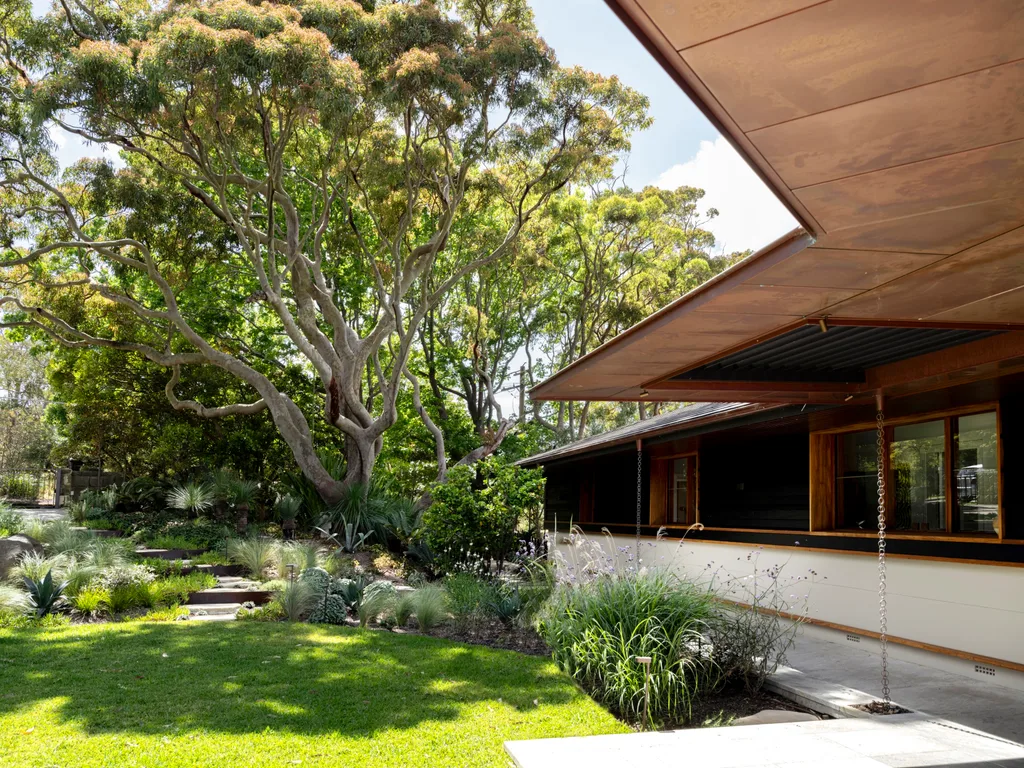
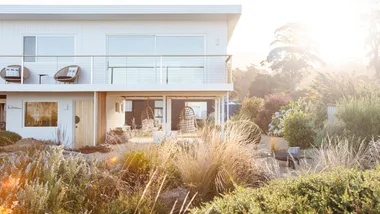
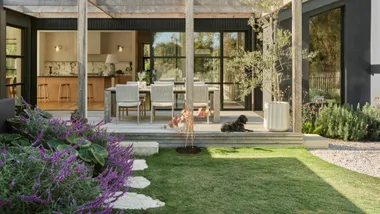
Julia had plenty to work with, including generous gardens, front and back. Using Walter Burley Griffin as his muse, Jorge ensured the home was immersed in its setting, by incorporating all-weathers entertaining areas, walls of glass and natural materials, such as timber, sandstone and a copper roof, all of which would be echoed in the landscape and Julia’s hardscaping choices.
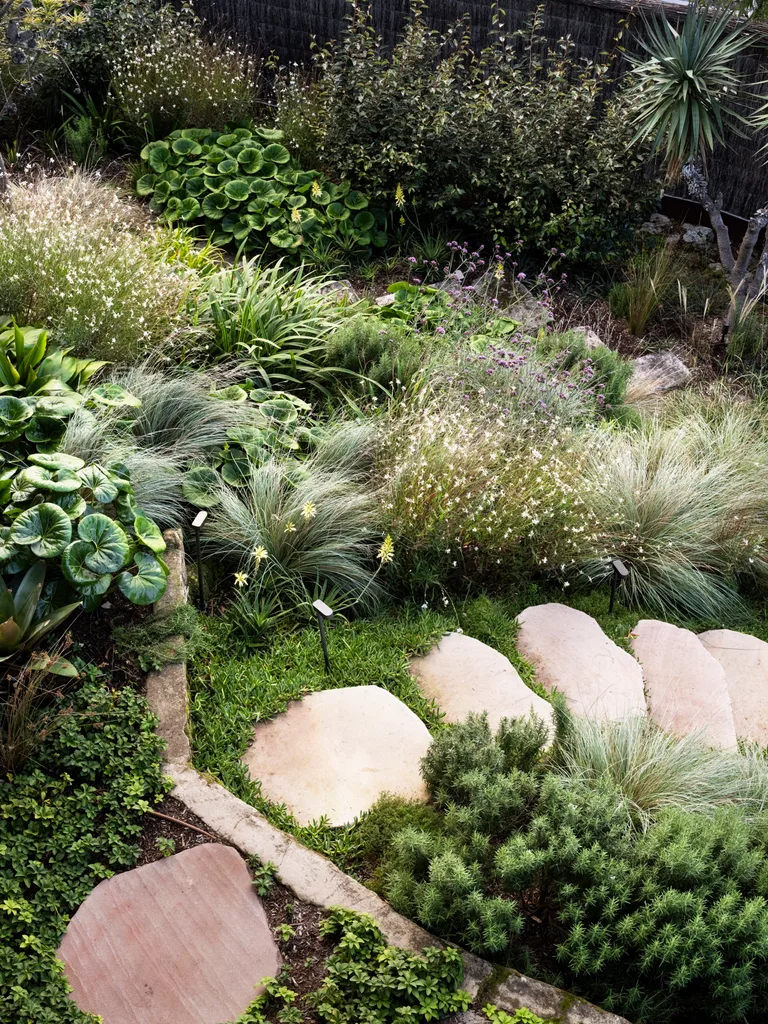
“Taking direction from the outcrops, we selected sandstone freeform steppers, while the driveway is in crazy paving,” she says.
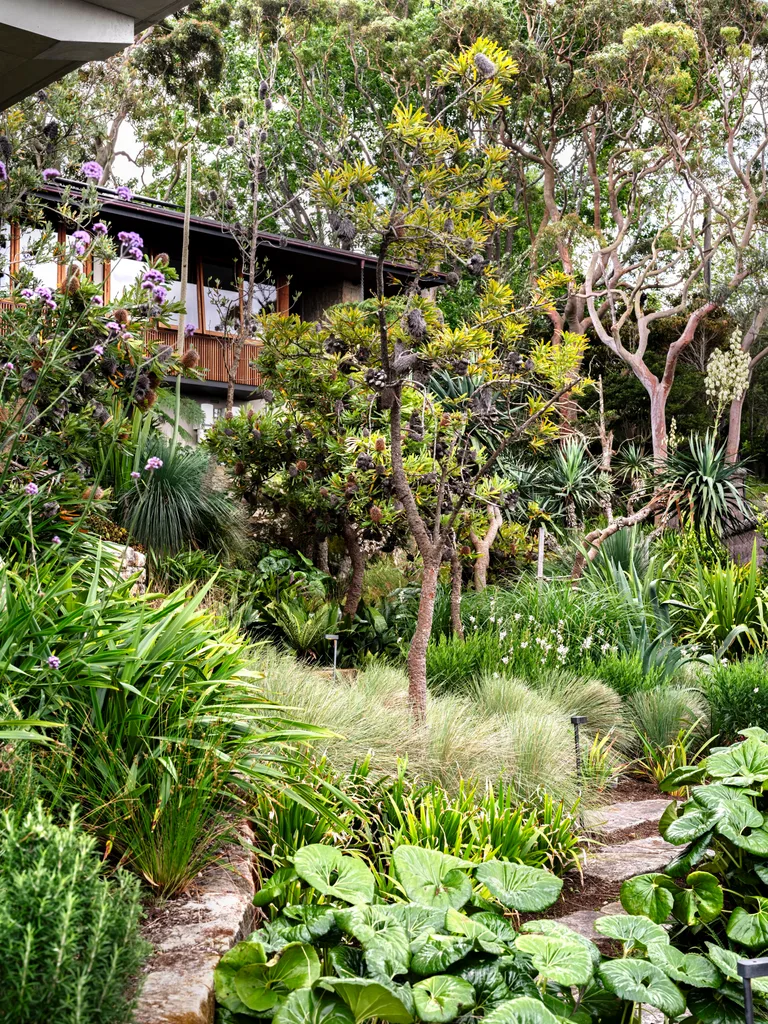
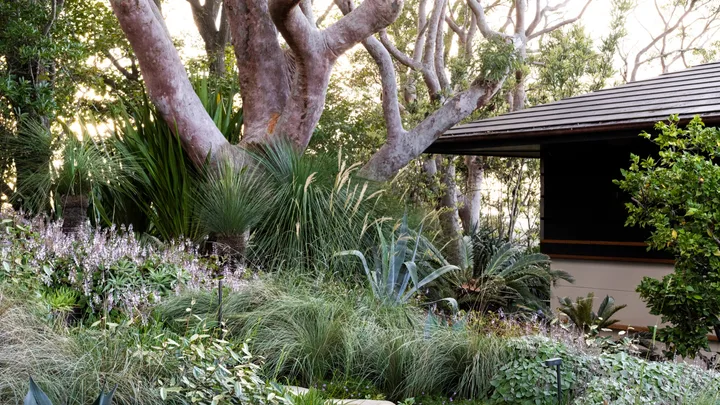
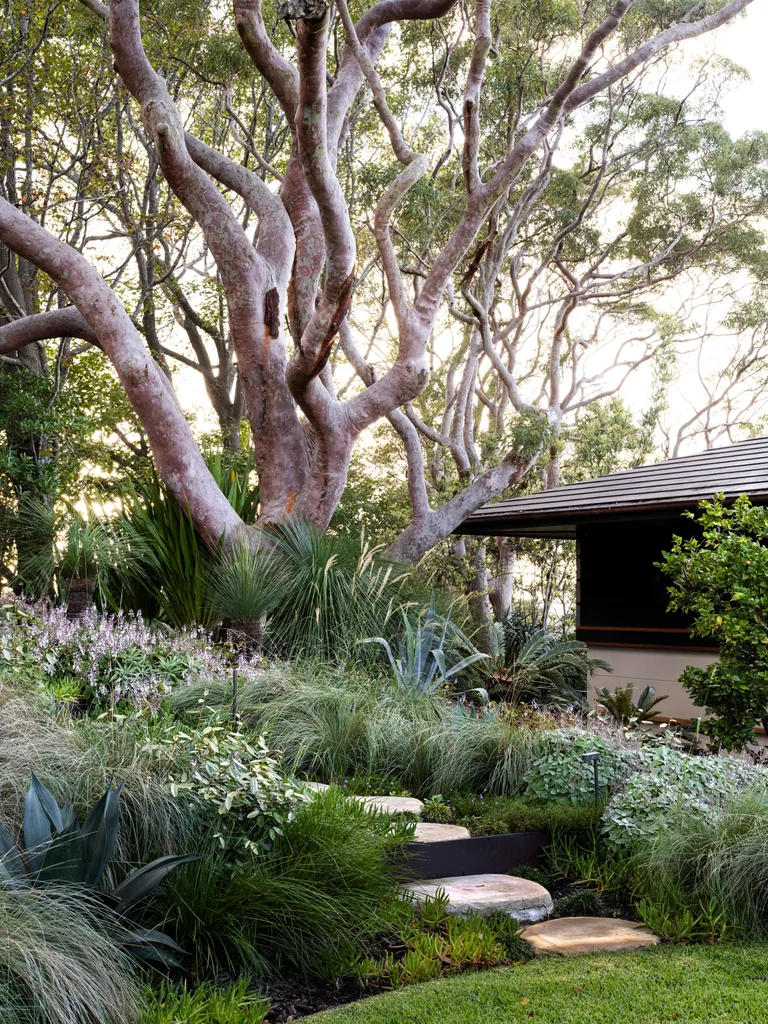
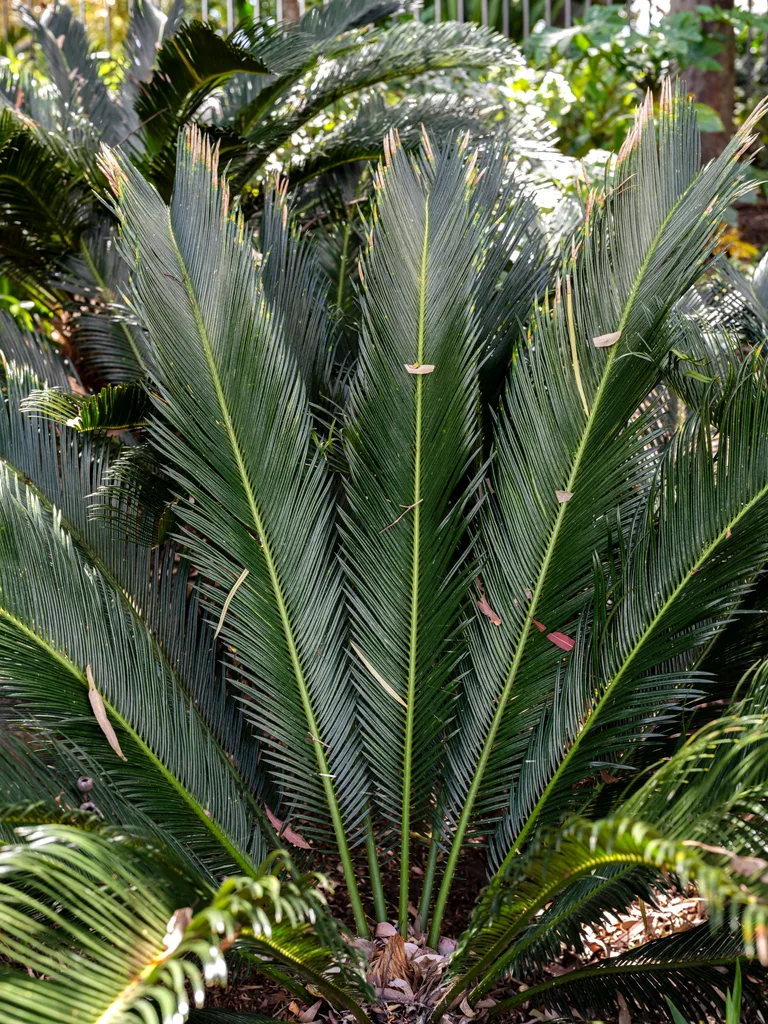
“As with the house, the owners wanted the plants to be sympathetic to their environment,” says Julia. That meant an emphasis on low-maintenance, robust varieties with an emphasis on natives, with existing mature specimens, such as a grove of five angophoras (Angophora costata), banksias (Banksia serrata), grass trees (Xanthorrhoea spp.) and lacy tree ferns (Cyathea cooperi), all setting the tone and retained as instant canopy.
“We wanted the plant palette to be largely native, but not in a strict or traditional sense,” she says.
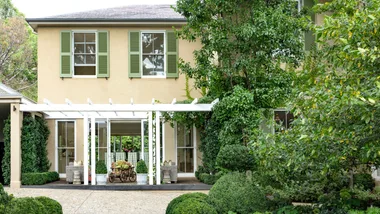
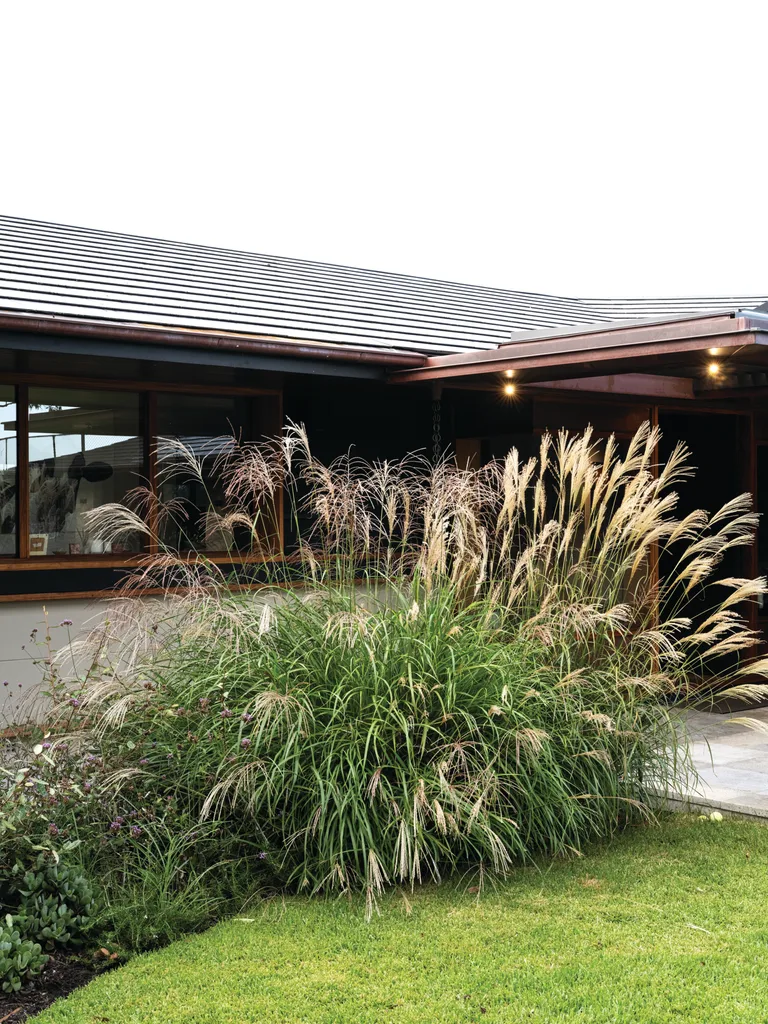
In the front driveway, the owners wanted a sense of arrival. Julia replaced parts of the driveway closest to the house with lawn, surrounded by diverse layered plantings of grass trees (Xanthorrhoea spp.), Swedish ivy (Plectranthus nico), purpletop vervain (Verbena bonariensis), butterfly bush (Gaura lindheimeri), rock orchids (Dendrobium speciosum) and Chinese silvergrass (Miscanthus sinensis).
“We wanted to give the entry softness, but also movement, to offset the architecture and complement the existing ferns and angophoras, while also providing a beautiful outlook,” she says.
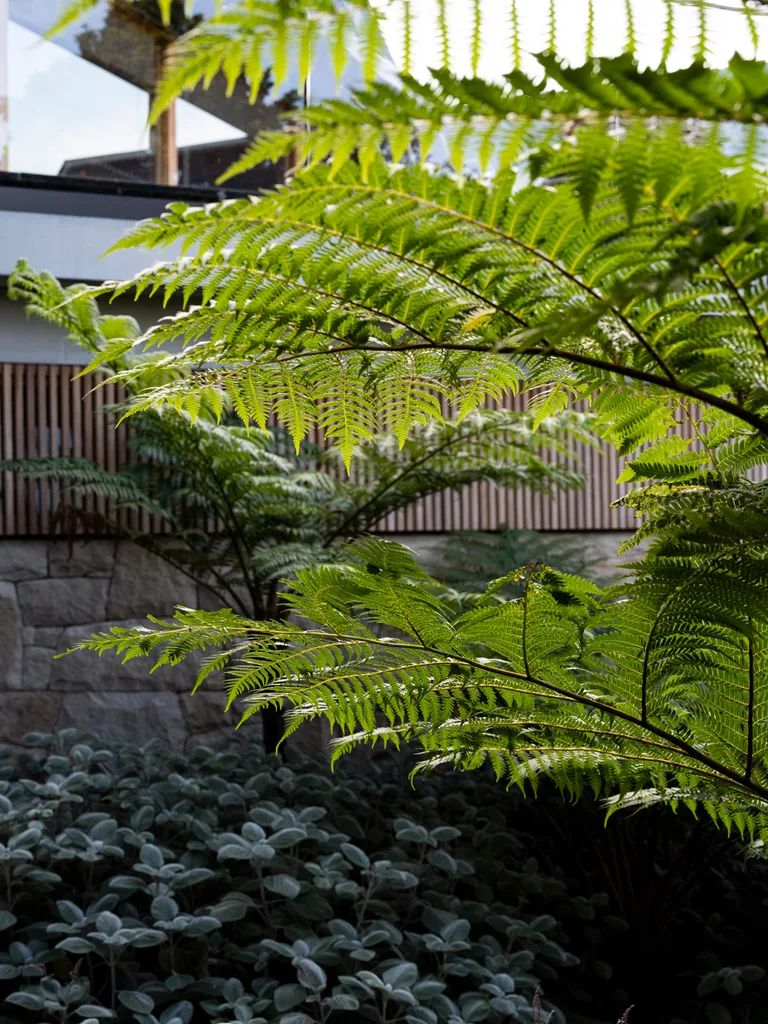
Jorge added a separate carport and studio, surrounded by soft, layered planting, such as lacy tree ferns (Cyathea cooperi), medinilla (Medinilla myriantha), Swedish ivy (Plectranthus ‘Nico’) and strappy-leafed walking iris (Neomarica gracilis), with kangaroo vine (Cissus antarctica) trailing up the carport.
“These gardens were mainly for aesthetics and to be viewed, rather than actively engaged with,” says Julia. By contrast, in a sunny spot along the side of the house, she created a produce garden.
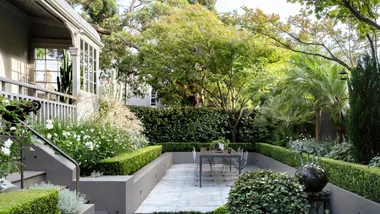
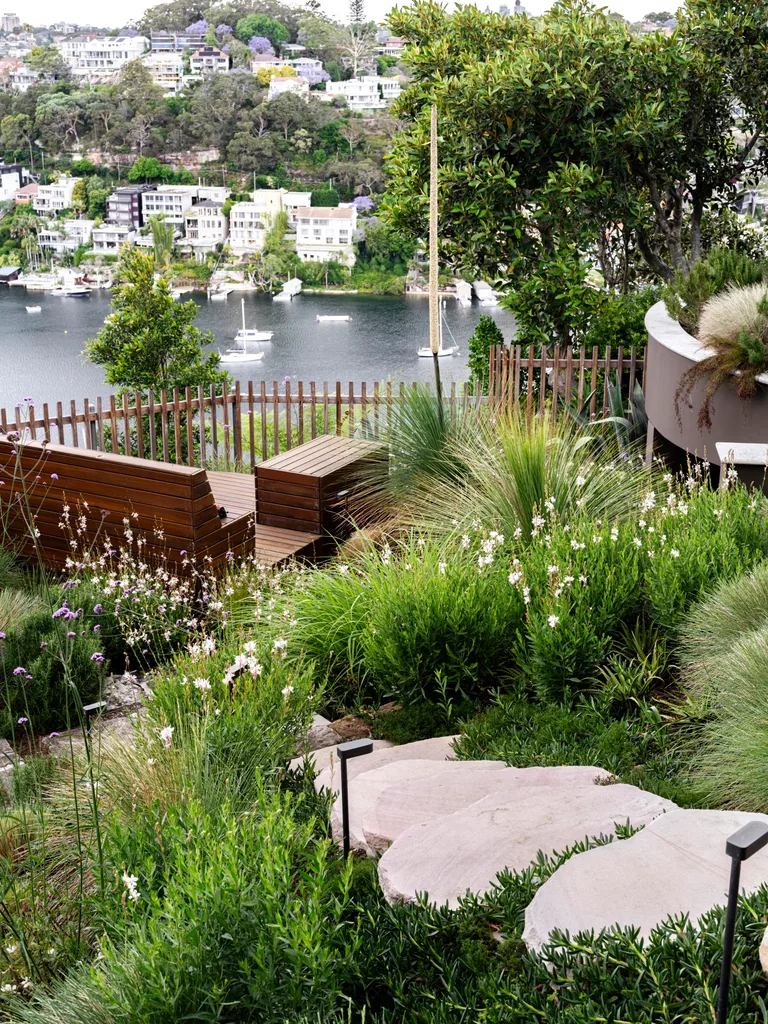
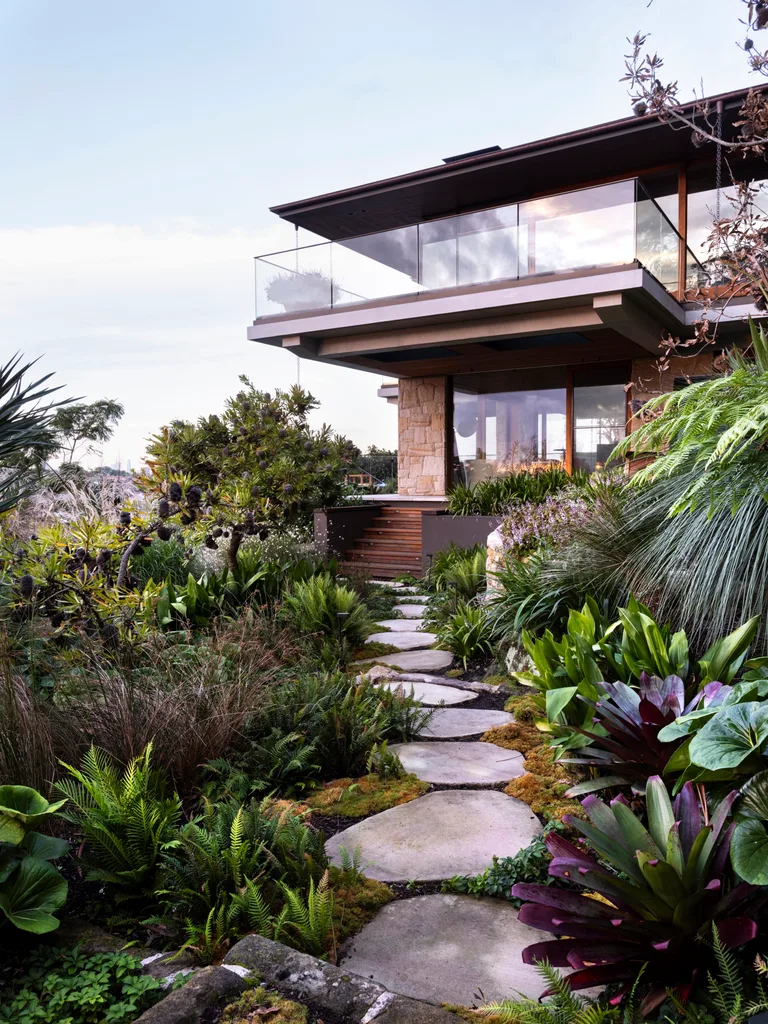
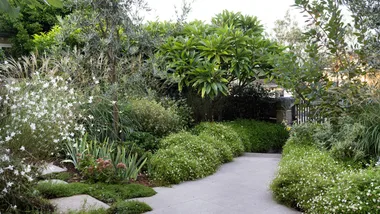
The garden on the south side, blessed with water views and all-day sun, was a different proposition. “We made this a whimsical space, where you can savour the journey down towards the water,” says Julia.
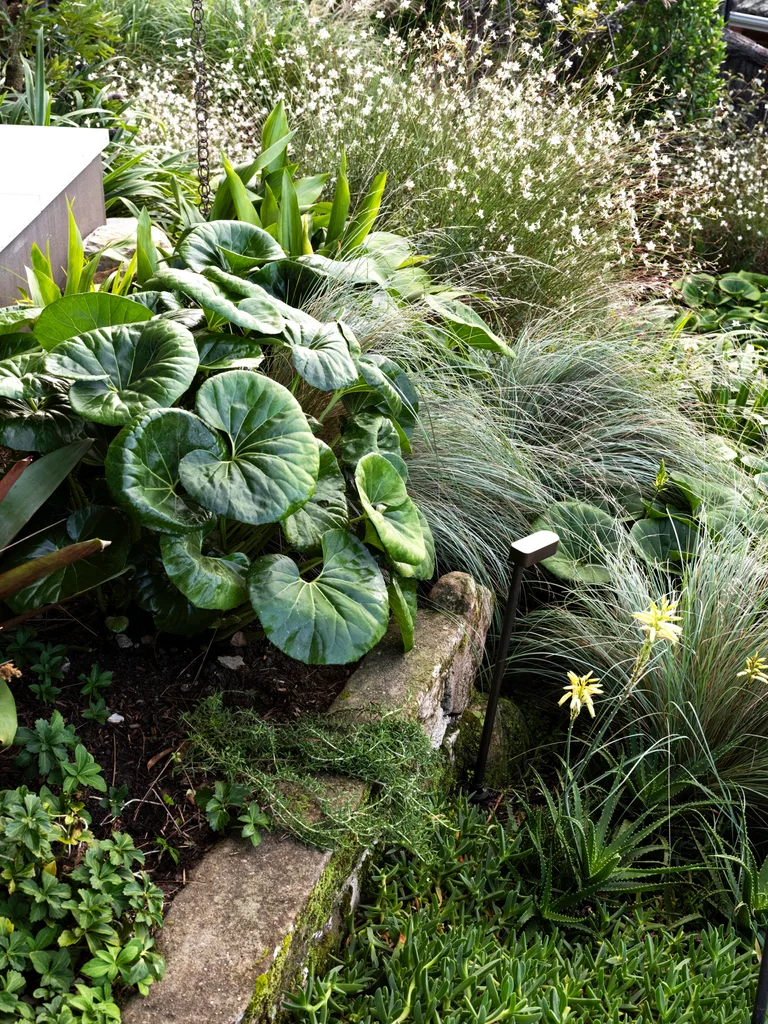
Eclectic plantings include butterfly bush (Gaura lindheimeri ‘White’) and prickly rasp ferns (Doodia aspera), with groundcovers such as cushion bush (Scleranthus biflorus) and tussock grass (Poa labillardieri ‘Eskdale’), and Tennyson Blue agaves (Agave hybrida ‘Tennyson Blue’).
Massed plantings create unity and richness throughout. “With more than 50 different species over a vast area and a plant palette so incredibly diverse, we used mass planting to break it up and rest the eye, while also creating lushness,” says Julia.
This also addressed a tricky site. Under that grove of angophoras, the owners had previously had no success with growing any plants. “So we selected one grass, lomandra (Lomandra longifolia ‘Tanika’), which we knew would work, and planted that en masse.”
And what is Julia most proud of? “Having a strong understanding of the site and suitable plants allowed us to work with it, rather than against it,” she says. “I love the garden’s natural integration to the site. It’s not one particular element that stands out, but rather an overall feeling of peaceful harmony.”
The Design Team:
Nelson Thomas: nelsonthomas.com.au.
Jorge Hrdina Architects: jorgehrdina.com.au.

Related stories
Native ad body.
Native ad body.
Native ad body.