 Photography: Dan Preston
Skylights are incredible at introducing light into even the darkest homes. They’re also a perfect alternative for rooms where you might want more privacy – bathrooms, walk-in robes, or rooms facing directly onto neighbours. But, they can be costly to install and don’t always add monetary value to your property. To help you navigate whether installing a skylight is worth it in your home, plus everything you need to know about skylights, we put some of the most commonly asked questions to architects Joe Snell of Studio Snell and Steph Ottavio of SJO Architects for take on skylights in the home, as well as Kristy Ryan, Managing Director of VELUX Australia & New Zealand for her expert opinion.
Smaller rooms benefit from skylights as they are given the illusion of space, and large rooms will see more dimension and shape. “A skylight can change a dark stuffy room that feels claustrophobic into a bright airy room that reaches for the heavens,” says Joe.
“When you introduce light from above, you’re effectively adding another surface to the room, and that completely changes how the space is experienced,” adds Steph.
Jump to:
What should you consider before installing skylights?
While you can control downlights, you can’t control the sun, so it’s important to work out what direction your skylight will face. This can also help determine whether a skylight will make your room hotter or not. “It’s not only about bringing light in – controlling that light is just as important,” says Steph.
“Is it on the northern slope of your roof letting in direct sunlight, or on the southern slope and letting in indirect sunlight only?” says Joe. “This is a design decision as many skylights are actually designed to let in indirect sunlight only, to give general light to a space while not letting in harsh sunlight. However, sometimes direct sunlight is exactly what you want.”
“Roof pitch and functional benefits also determine which product is suitable when considering pitched vs flat roof skylights and opening vs fixed skylights.” adds Kristy.
“If the goal is simply to bring more daylight into a dark space, a fixed skylight can be a cost-effective solution that still delivers a significant impact. However, if the room experiences moisture, steam, heat build-up or stale air, an opening skylight may be a better choice, helping create a healthier and more comfortable indoor environment through natural ventilation.”
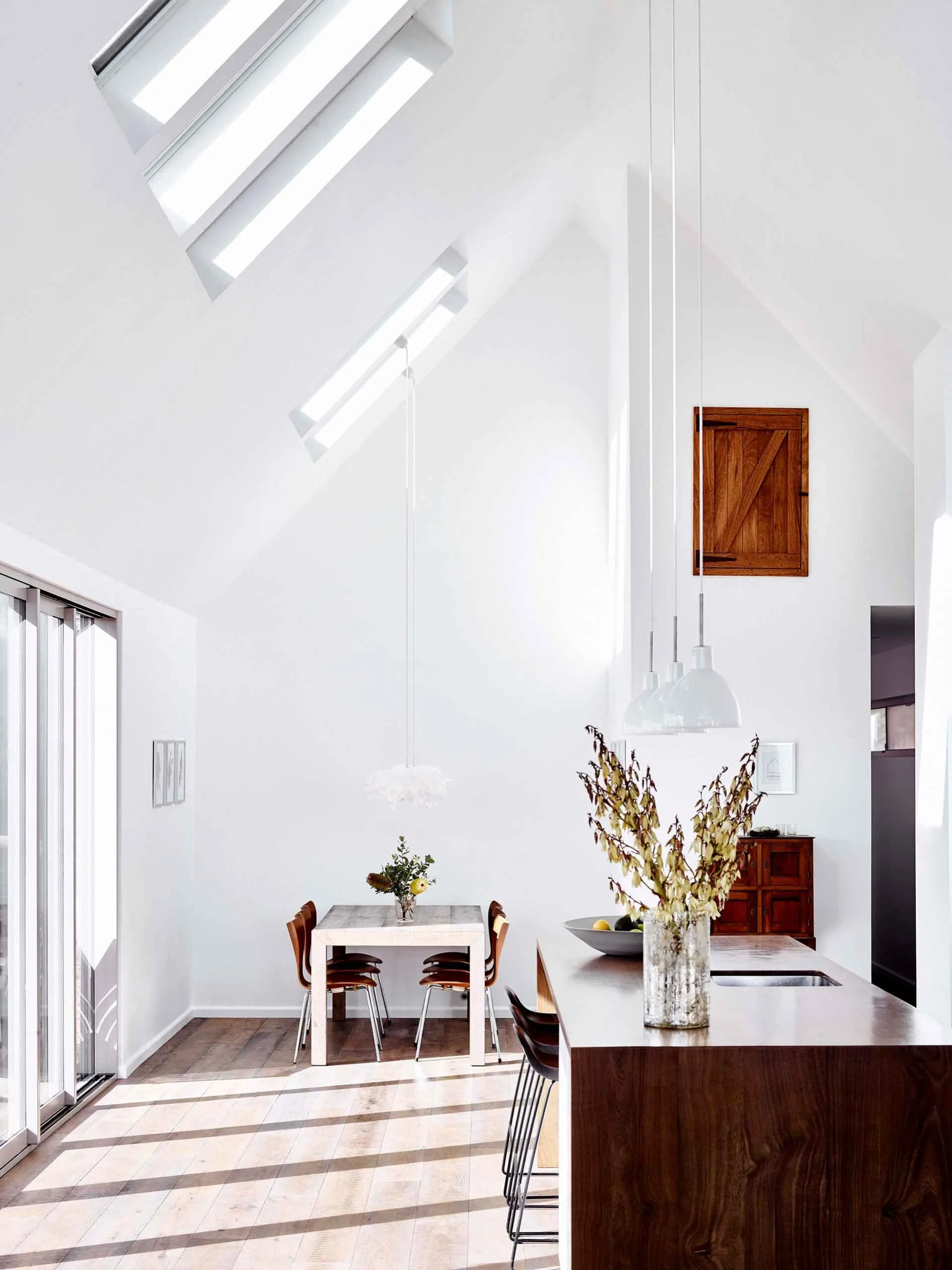
Architect Joe Snell of Studio Snell helped realise this couple’s dream of a Danish-inspired pitched-roof cabin in Capertree Valley. The open-plan kitchen and dining area is flooded with natural light, thanks to an abundance of skylights. (Photography: Mark Roper / Story: Country Style)
Can you install skylights on any roof?
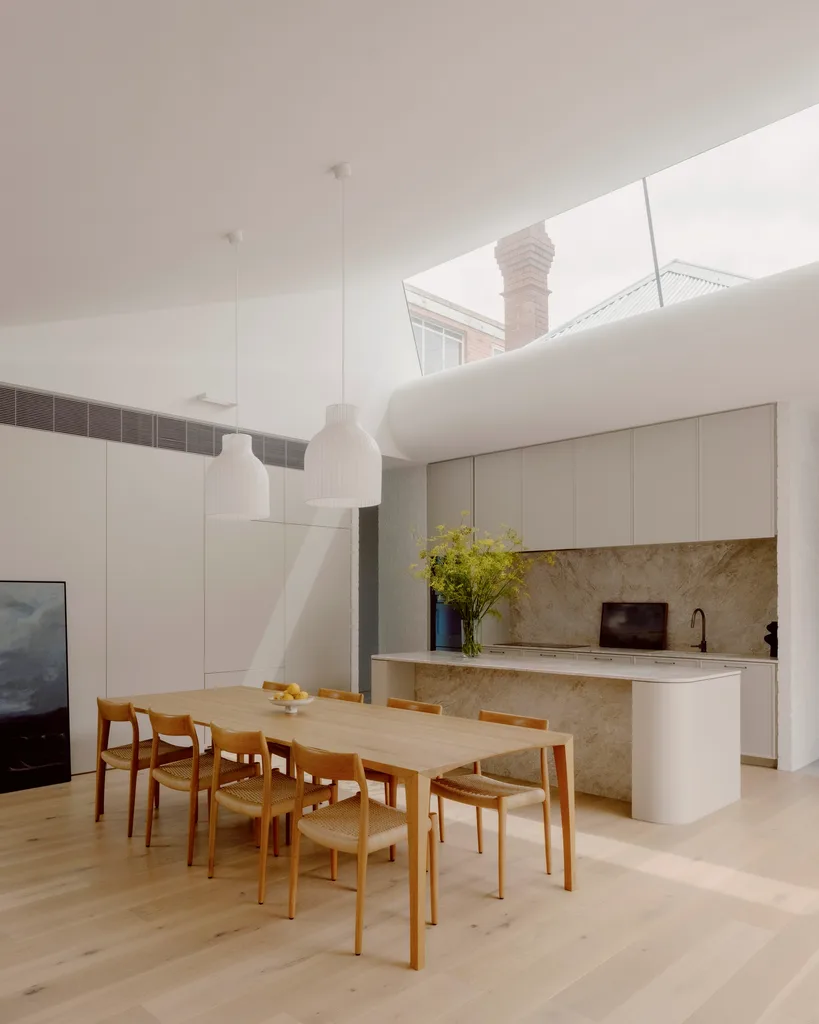
Before you install skylights, you should consider the kind of roof that you have, and how far away the roof line is from the ceiling. For example, with a conventional gabled roof with a flat ceiling, a plasterboard shaft is often required to connect the room to the skylight.
“I always see this as an opportunity,” says Joe, “as you can have a small skylight but widen the shaft so that the sense of light is huge in the ceiling.” This not only reduces cost, but makes for a big statement in your space. “By contrast, a skillion or near flat roof means the skylight is very close to the ceiling and will feel very direct in the space,” adds Joe.
“When I work with higher ceilings, skylights are the best way to light the space as they allow the light to bounce in a way that windows just can’t,” says Steph.
“With the right design approach and product, skylights can be successfully integrated into almost any home,” Kristy adds.
Where is the best place for a skylight?
Once predominantly used to bring light into attic and loft spaces, skylights are now used all throughout our homes – in entry hallways, living rooms, and above showers. But they’re not always necessary or appropriate in all cases.
“I think skylights are very important in houses with a square floorplan as the skylight allows natural light into the middle of these otherwise dark spaces,” says Joe. “A narrow house with windows on both sides has less need for skylights, and if you want to avoid harsh direct sunlight into a space, then they are unnecessary.”
Bathroom
Bathrooms are often the most practical starting point Kristy suggests . “They benefit from natural light while maintaining privacy, particularly in layouts where traditional windows aren’t an option, and allow steam and humidity to rise and escape naturally, improving air quality and minimise the risk of mould.”
Kitchen and dining
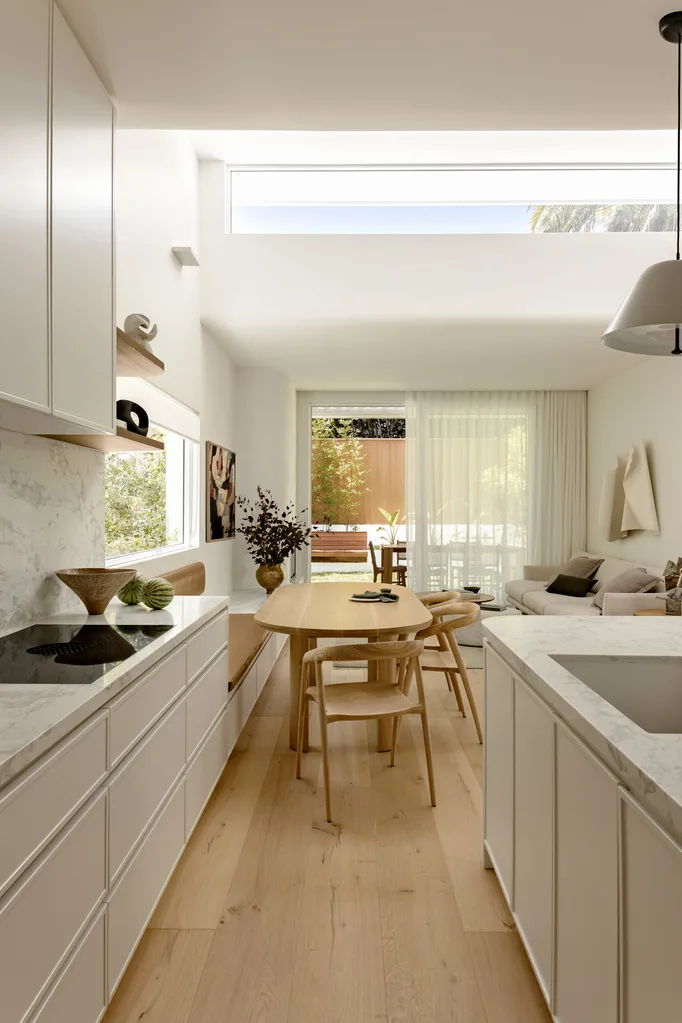
Kitchens and dining areas are another natural fit, particularly in homes where these spaces sit deeper within the floorplan. “Overhead light brightens benchtops and work zones, while passive ventilation helps release heat, steam and cooking odours creating a more comfortable and functional environment,” says Kristy.
Bedroom
Bedrooms can also benefit more than many homeowners expect. “Access to natural light and fresh air plays an important role in supporting better sleep, with research showing that morning light helps regulate circadian rhythms. Pairing skylights with solutions like blinds also allows for greater control, so the room can be kept dark until you’re ready to wake,” Kristy says.
LED skylights or traditional skylights?
When it comes to LED skylights – like the popular artificial Illume Skylights or AuraGlow LED Skylight, which change in intensity according to the natural daylight – they are a popular, cost-effective solution. However, Steph says there’s nothing like the classics. “Natural light shifts throughout the day…it changes in tone, intensity and warmth, and that has a huge impact on how a space feels.”
“Skylights bring in light, but they also improve ventilation and access to fresh air which has a huge impact on your wellbeing. When you bring in real light and fresh air, it changes everything.”
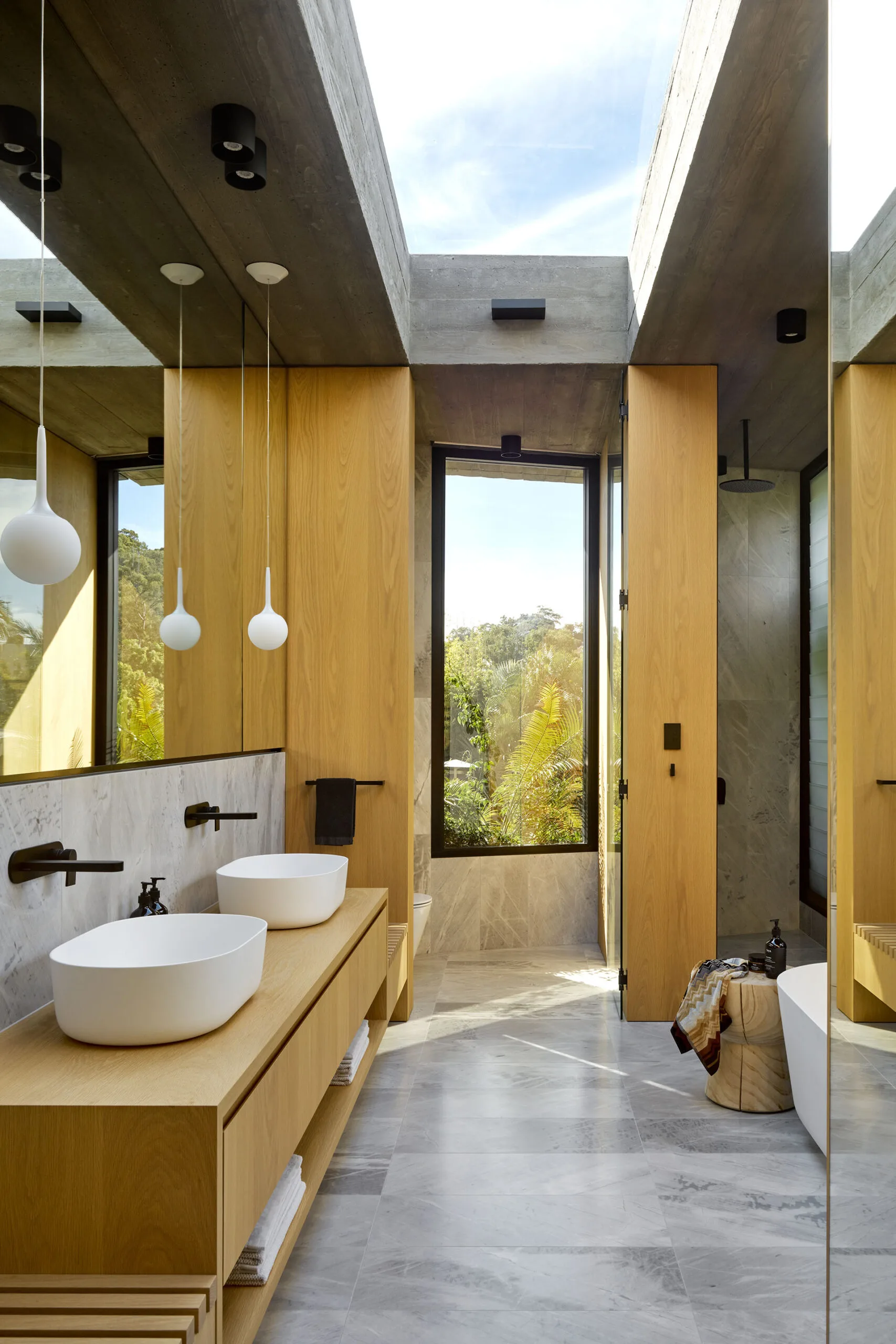
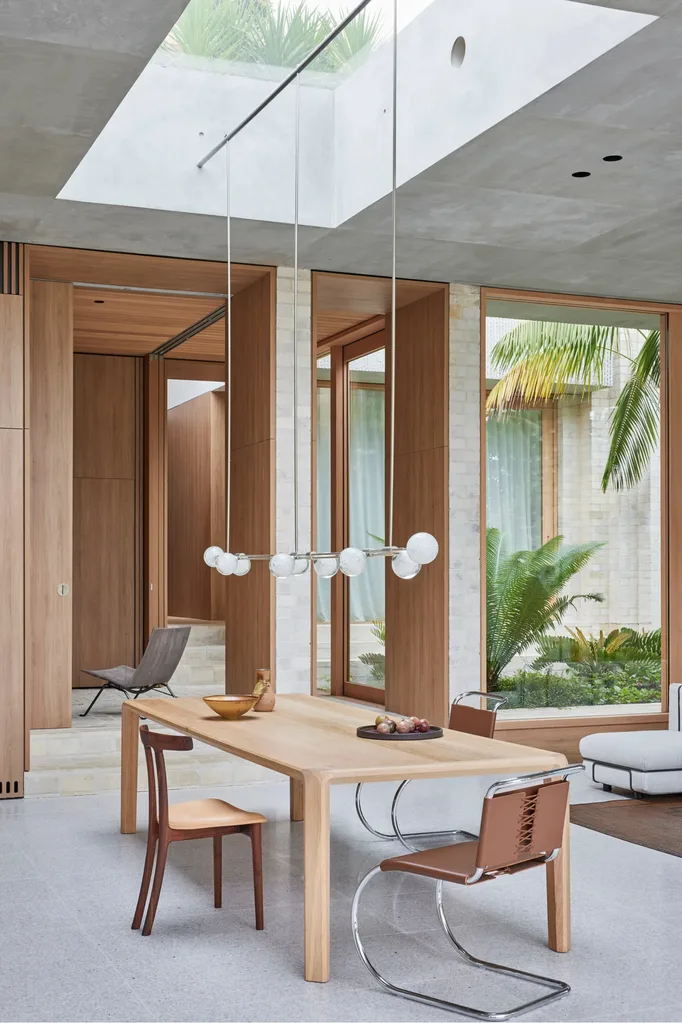
Even though the bathroom in this zen holiday home incorporates a heavier material palette such as timber, stone and concrete, the installation of a large-scale skylight gives the space a sense of weightlessness, and almost feels like it doesn’t have a roof. (Photography: Christopher Frederick Jones / Story: Belle)
Does a skylight add value to your home?
From a design perspective, Joe thinks skylights “always add delight to a space.” But with typical Australian homes, they also offer a level of practicality.
“With operable skylights being openable for air and also having a blind to stop the harsh sunlight if needed,” says Joe, “a modern skylight is more often than not a major attribute to an Australian home.”
“Stop looking at design as just aesthetic,” Steph suggests. “When you focus on light, air and how a space makes you feel, that’s when you create a home that truly works.”